Prepare one quiet home base
- Choose a low-traffic resting area with comfortable bedding, water, and enough separation from household activity.
- Use a crate only if it is introduced safely and the dog is comfortable with it. A barrier, room, or pen may be more appropriate for another dog.
- Remove food, medication, cables, bins, toxic products, fragile items, and objects the dog could swallow.
- Check doors, windows, gates, balconies, fences, leads, collars, and harness fit before relying on them.
- Separate the new dog from resident animals until introductions can be planned and supervised.
Make the first days predictable
- Keep meals, toilet breaks, walks, medication, and rest at roughly consistent times.
- Use one or two quiet walking routes before adding busy places.
- Keep interactions short and optional. Sit nearby rather than repeatedly reaching for the dog.
- Offer simple enrichment that does not create frustration, competition, or guarding risk.
- Protect long periods of uninterrupted rest.
Reduce social pressure
- Delay welcome parties, dog parks, crowded shops, and unnecessary introductions.
- Ask household members not to corner, hug, loom over, or wake the dog for interaction.
- Let the dog approach and move away. Do not force contact because the dog accepted it once.
- Give children clear, supervised boundaries and a dog-free space.
- Tell visitors exactly what to do, including when ignoring the dog is the kindest option.
Observe without forcing a conclusion
- Record eating, drinking, toileting, sleep, movement, medication, and any vomiting, diarrhea, coughing, itching, pain, or lethargy.
- Note the situation before a behavior, the behavior itself, and what happened afterward.
- Watch for patterns around doors, handling, food, resting places, other animals, traffic, and unfamiliar people.
- Treat withdrawal, stillness, hiding, or unusually quiet behavior as information, not proof that the dog is fully settled.
- Avoid testing reactions by deliberately exposing the dog to something difficult.
Use management before training ambition
- Create distance from triggers before asking for a behavior.
- Use barriers, covered windows, quieter routes, and scheduled turns to prevent repeated overwhelm.
- Reinforce behaviors you want with food, access, play, or distance that the dog values.
- Avoid pain, intimidation, flooding, leash corrections, shock, prong, or choke equipment.
- Keep identification and microchip contact details current, and use secure equipment suited to escape risk.
The American Veterinary Society of Animal Behavior recommends reward-based methods for dog training and behavior modification.
Arrange ordinary health care
- Review available vaccination, parasite, medication, microchip, diet, and prior veterinary records.
- Establish a veterinary relationship and ask when the first examination should occur.
- Change food gradually when possible and ask for veterinary guidance if appetite or digestion is poor.
- Ask before combining supplements, calming products, or over-the-counter medication with prescribed treatment.
Get help early when safety or health changes
- Contact a veterinarian promptly for breathing difficulty, collapse, repeated vomiting, severe diarrhea, inability to urinate, suspected toxin exposure, significant injury, extreme lethargy, or another urgent health change.
- Seek veterinary assessment when sudden behavior change could involve pain or illness.
- Seek qualified behavioral help for biting, escalating aggression, severe fear, panic when alone, repeated escape attempts, or a household situation that cannot be managed safely.
- Use a credentialed, reward-based professional and ask what methods and equipment they use before hiring them.
End the week with a household review
- Which routines appear to help the dog eat, rest, toilet, and move through the home comfortably?
- Which situations produced fear, conflict, guarding, escape attempts, or prolonged distress?
- What can be prevented through distance, barriers, scheduling, or a quieter route?
- Which questions belong with the veterinarian, shelter or rescue, or a qualified behavior professional?
- What pressure can the household remove next week instead of adding a new test?
Scope and limits
Rescue dogs do not follow one guaranteed decompression timeline, and behavior in the first days does not reveal every future need. This plan supports observation and household management. It does not diagnose illness or behavior, and it does not replace a veterinarian or qualified behavior professional.
Sources and further help
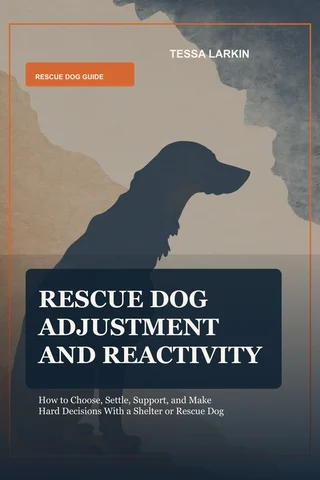
Explore the book
Rescue Dog Adjustment and Reactivity by Tessa Larkin is published by Alderwake Press in the Practical Systems line.
About the bookRelated Alderwake resources
Practical notesApartment Emergency Preparedness Checklist for Small Spaces
A small-space preparedness system organized by function, rotation, evacuation, documents, and the constraints renters cannot simply renovate away.
First Apartment Setup Checklist: What to Do Before and After Move-In
A practical sequence for documenting the apartment, connecting essentials, checking safety, and building household routines without trying to solve everything on day one.