Start with the building and local hazards
- Learn the building's alarm, evacuation, shelter, lift, stair, entry, and utility procedures.
- Identify two ways out where the building design allows it, and keep routes free of boxes, shoes, and furniture.
- Find the local official alert service and save the non-emergency contact for building management.
- List the hazards most relevant to the location, such as extreme heat, winter weather, wildfire smoke, flood, earthquake, storm, or extended outage.
- Ask what support a household member may need if lifts, refrigeration, powered equipment, or ordinary transport is unavailable.
Water and food
- Store an amount of water that fits the household and local guidance, then expand gradually where space and lifting ability allow.
- Spread weight across safe storage locations rather than overloading one shelf.
- Choose shelf-stable food the household already eats and can open and prepare without normal cooking.
- Include a manual can opener if any food requires one.
- Mark dates and rotate supplies into normal meals before quality declines.
- Account for infants, pets, allergies, medical diets, and cultural needs.
Sanitation and basic health
- Keep soap, hand sanitizer, rubbish bags, toilet paper, menstrual supplies, nappies if needed, and a practical cleaning product together.
- Store a modest first-aid kit and know what each item is for.
- Keep a current medication list, pharmacy details, prescriber contacts, allergies, and relevant medical information.
- Ask a pharmacist or clinician how essential medication should be stored and what to do during an extended disruption.
- Include masks appropriate to the hazards and health needs identified by local authorities.
Light, communication, and charging
- Place battery-powered lights where they can be reached before moving through a dark room.
- Keep spare compatible batteries stored correctly, or use rechargeable lights with a regular charging routine.
- Maintain at least one charged power bank and the correct cables.
- Use a battery or hand-crank radio if official local guidance recommends one.
- Keep key phone numbers and meeting information on paper in case a device is unavailable.
- Agree on an out-of-area contact and a household check-in plan.
Evacuation and a portable bag
- Keep sturdy shoes, keys, identification, essential medication, a light, water, weather protection, and a charging cable easy to reach.
- Include copies of essential contact and medical information.
- Prepare carriers, leads, food, and records for pets.
- Know where you could go if the building is inaccessible, including an option that works without a car.
- Do not let emergency storage narrow an exit path.
Documents and access
- Keep copies of identification, insurance, lease, medication, emergency contacts, and important account numbers in a protected portable format.
- Store encrypted digital copies where a trusted household member can access them.
- Photograph possessions for insurance records without exposing the archive publicly.
- Include a small amount of cash if that is safe and practical, because electronic payment may be disrupted.
Make a small apartment system sustainable
- Choose one compact location for portable supplies and one or two distributed locations for heavier items.
- Label containers by function so that another person can find an item quickly.
- Add a recurring calendar check for batteries, water, food, medication information, documents, and seasonal needs.
- Use and replace stored household goods rather than maintaining a forgotten duplicate household.
- Rehearse leaving the apartment with the portable bag and required mobility or pet equipment.
Scope and limits
Emergency needs vary by hazard, climate, building, household, disability, medication, pet, and local response system. Follow alerts and preparation guidance from local emergency management, the building, and relevant health authorities.
Sources and further help
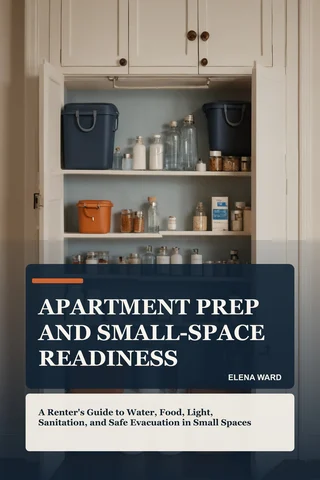
Explore the book
Apartment Prep and Small-Space Readiness by Elena Ward is published by Alderwake Press in the Practical Systems line.
About the bookRelated Alderwake resources
Practical notesApartment Power Outage Readiness: Light, Food, Water, Heat, and Charging
A safe, compact outage plan for lighting, food, water, charging, communication, temperature, medication, and carbon monoxide risk.
First Apartment Setup Checklist: What to Do Before and After Move-In
A practical sequence for documenting the apartment, connecting essentials, checking safety, and building household routines without trying to solve everything on day one.