Before you collect the keys
- Save a complete copy of the signed lease, building rules, move-in instructions, and every receipt.
- Confirm the exact amount and permitted method for any remaining payment. Record when and how it was paid.
- Write down how keys, access cards, parking permits, and package access will be handed over.
- Confirm which utilities you must start, which are building-managed, and the date each service should begin.
- Arrange renters insurance if it is required or appropriate for your situation, and keep the policy details with your lease records.
- Plan the first trip into the apartment around essentials, not decoration. Bring lighting, water, basic cleaning supplies, medication, toilet paper, a phone charger, and tools needed for approved furniture assembly.
Make a move-in condition record
Walk through the apartment before it fills with boxes. Take clear, date-stamped photographs or video of every room, appliance, fixture, floor, wall, window, and existing mark. Include wide views and close details.
Complete the landlord or property manager's condition form on time. Describe what you can observe without diagnosing the cause. Keep the submitted copy and the message or receipt showing when it was sent.
- Record existing stains, chips, holes, water marks, loose hardware, missing items, and appliance damage.
- Test doors and windows for ordinary operation and note anything that does not latch or lock as expected.
- Check that taps run, drains clear, toilets flush, and supplied appliances switch on.
- Record meter readings if your lease or utility arrangement makes them relevant.
Run the first safety check
- Identify every exit from the apartment and building. Keep the route clear of boxes.
- Confirm that smoke alarms and any required carbon monoxide alarms are present. Use the manufacturer's test control where you can do so safely, and report missing or nonworking units promptly.
- Locate the electrical panel, water shutoff information, fire extinguisher if supplied, and building emergency instructions.
- Check that the entry door and accessible windows secure properly. Report faults rather than improvising changes that may violate the lease.
- Save the building management, maintenance, utility emergency, and local emergency numbers somewhere accessible even if your phone is locked.
The U.S. Consumer Product Safety Commission recommends checking rental homes for working smoke alarms, carbon monoxide alarms, and fire extinguishers. Local requirements may be more specific.
Make the home usable before making it finished
- Set up one place to sleep, one place to wash, one way to prepare a simple meal, and one place for important documents.
- Put cleaning basics where they will be used. A small bin in the kitchen or bathroom is more useful than a perfect supply closet that is still boxed.
- Create a landing place near the entrance for keys, wallet, mail, and anything that must leave with you.
- Label the few boxes you still need to open by function, such as bedding, kitchen basics, work, or medication.
- Wait before filling every empty space. Living in the apartment will reveal which storage and furniture solve real problems.
Build four small household systems
- Bills: keep due dates, account numbers, and payment confirmation in one place. Add calendar reminders several days before each due date.
- Food: choose a short list of repeat meals and a regular day to check what needs using before you shop.
- Cleaning: assign a few small tasks to days or triggers, such as wiping the bathroom after laundry or taking rubbish out before a regular morning departure.
- Maintenance: keep a dated log of faults, reports, responses, and repairs. Photograph changes when useful.
Recheck after the first week and first month
- Review the move-in record while the apartment is still new to you. Submit any permitted additions before the deadline.
- Check the first utility statements for correct service dates and account details.
- Remove trip hazards and make sure exits, alarms, vents, and heaters are not blocked by unpacking.
- Notice repeated friction. If you are always losing keys or missing a bill, change the system before buying more storage.
- Create a short monthly reset for bills, food, supplies, cleaning, and maintenance follow-up.
Scope and limits
This checklist covers general household organization and visible safety checks. Lease rules, tenant rights, required alarms, utility responsibilities, and move-in inspection procedures vary by location and building. Use the lease and local official guidance for requirements that apply to your home.
Sources and further help
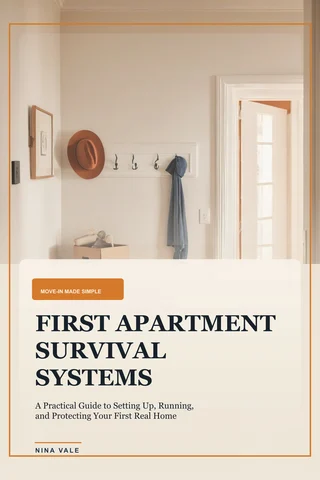
Explore the book
First Apartment Survival Systems by Nina Vale is published by Alderwake Press in the Practical Systems line.
About the bookRelated Alderwake resources
Practical notesApartment Emergency Preparedness Checklist for Small Spaces
A small-space preparedness system organized by function, rotation, evacuation, documents, and the constraints renters cannot simply renovate away.
First Apartment Essentials: What You Actually Need and What Can Wait
A restrained first-apartment essentials list organized by urgency, function, and the costs that are easiest to avoid.