Listening is not neutral
A late-night radio program depends on listening, selection, framing, and transmission. The speculative signal at the novel's center makes those ordinary editorial choices newly visible.
As you read, distinguish the ability to receive a message from the authority to interpret it and the right to share it. The three do not always travel together.
Privacy and public evidence
- When does private experience become evidence of a public danger?
- Who gets to decide whether disclosure is necessary?
- What can be proven without exposing a person who did not choose an audience?
- Does a larger audience strengthen evidence, or change the thing being heard?
Consent and broadcasting
Broadcasting turns a moment into a relationship among speaker, listener, subject, platform, and audience. Even a well-intentioned transmission can redistribute control.
- What forms of consent are possible when the subject of a broadcast is absent, unknown, or unable to respond?
- When does editing protect someone, and when does it claim ownership of their account?
- How does the promise of public good complicate individual refusal?
Trust and slow-burn intimacy
- What must Covo and Hessa learn about each other's methods before trust becomes possible?
- How does professional competence shape attraction in the novel?
- Which boundaries protect intimacy rather than prevent it?
- How does queer slow-burn intimacy change the pace at which private information is offered or withheld?
Communication systems
- Moments when a technical fault and a human choice are difficult to distinguish.
- Descriptions of relays, cabinets, signals, voices, dead air, and audiences.
- Scenes where the same message means something different to a private listener and a public audience.
- Uses of silence as absence, refusal, protection, or evidence.
Book group questions
- What is the difference between being heard and being understood in the novel?
- Which act of listening felt most respectful, and what made it so?
- When does withholding information become a breach of trust, and when is it a necessary boundary?
- How does the existence of an audience change Covo's responsibilities?
- What would responsible broadcasting require when evidence and consent point in different directions?
Scope and limits
This companion avoids major plot disclosures and does not settle the novel's ethical questions. It offers thematic entry points for reflection and discussion.
Explore the book
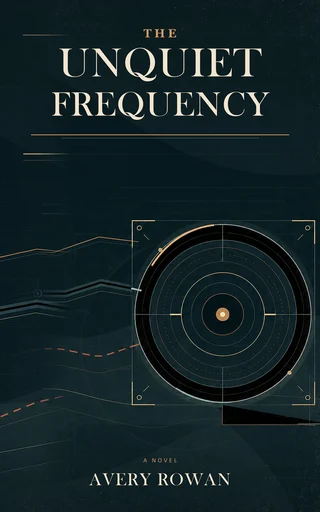
The Unquiet Frequency by Avery Rowan is published by Alderwake Press in the Literary & Speculative Fiction line.
About the bookRelated Alderwake resources
Reading companionWhat Maps Include, and What They Leave Out
A spoiler-light companion for reading maps as records, arguments, and instruments that shape borders, witness, accountability, and belonging.
Records, Evidence, and Belonging in The Census of Unlit Stars
A spoiler-light companion for thinking about records, lived reality, evidence, memory, and the uneasy conditions of institutional visibility.