Before or during the novel
The city of Vey depends on a census of stars for practical decisions, and the discovery at the center of the novel makes classification inseparable from power. As you read, notice when a record is treated as a description and when it begins to determine what the city can acknowledge.
You can keep the questions below beside you without looking for a single symbolic key. The novel's records, instruments, testimony, and memory do different kinds of work.
Records and lived reality
- When does a record clarify a life, and when does it replace the life with an administratively useful version?
- Which absences seem accidental, and which begin to look produced?
- What does the city make possible for people who can be counted, named, or placed in an official category?
- What remains true even when the accepted record cannot contain it?
Evidence and memory
Evidence can be material, procedural, remembered, witnessed, or inferred. The differences matter because each kind of evidence asks another person or institution to decide what deserves belief.
- Which evidence gains authority because of where it is stored or who is allowed to interpret it?
- When does memory correct a record, and when does the record challenge memory?
- What level of proof seems to be demanded from people already made difficult to see?
- How does uncertainty change the ethical weight of acting or refusing to act?
Legibility and belonging
Institutional legibility is the condition of being visible in forms a system can process. It can bring recognition or protection, but it can also expose, classify, and control.
- Who benefits from being made legible in Vey, and who bears the cost?
- Does belonging in the novel depend on recognition, participation, memory, documentation, or something else?
- What is lost when protection is offered only through the categories that produced exclusion?
Language to return to
- Passages where numbers or categories appear beside individual experience.
- Moments when a person, object, or event is declared absent.
- Scenes where professional procedure and personal obligation come into conflict.
- Descriptions of seeing, measuring, naming, recording, and erasing.
Book group questions
- Which institution in the novel felt most trustworthy at first, and what changed that impression?
- Is visibility always preferable to invisibility in the world of the novel?
- Choose one disagreement about evidence. What would each side need to recognize before the disagreement could change?
- How does the speculative premise make an ordinary bureaucratic problem newly visible?
- Which uncertainty remained productive after the final page?
Scope and limits
This companion avoids major plot disclosures and does not supply a correct interpretation. Its questions are designed for individual reflection, a book group, or a return to particular passages after reading.
Explore the book
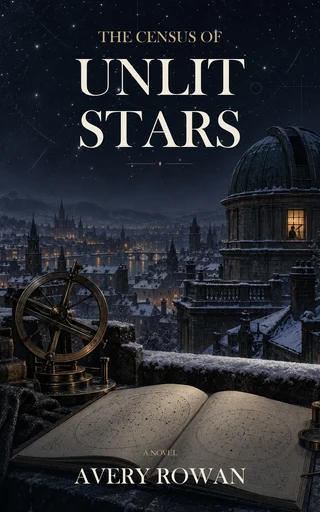
The Census of Unlit Stars by Avery Rowan is published by Alderwake Press in the Literary & Speculative Fiction line.
About the bookRelated Alderwake resources
Reading companionWhat Maps Include, and What They Leave Out
A spoiler-light companion for reading maps as records, arguments, and instruments that shape borders, witness, accountability, and belonging.
Listening, Privacy, Evidence, and Consent
A spoiler-light companion for thinking about hearing, broadcasting, privacy, evidence, consent, trust, and queer slow-burn intimacy.