Stage one, create a first buffer
Choose a first amount that is small enough to pursue now and large enough to absorb one ordinary disruption, such as transport, medication, a utility shortfall, or a minor repair. The purpose is not to declare yourself fully prepared. It is to put some distance between a surprise and the next harmful choice.
- Name the first problem the buffer is meant to cover.
- Set a target based on that problem rather than a slogan.
- Track progress in dollars, not in moral judgments about the pace.
- Keep the money accessible for a real emergency but separate from everyday spending.
Find a contribution that survives a difficult month
- Review the last one or two months of actual transactions instead of building a budget from memory.
- Look first for timing problems, duplicate services, unused subscriptions, recurring fees, and expenses that can be renegotiated.
- Choose a small automatic transfer after a reliable income event if your account balance can support it.
- Give part of irregular income, refunds, gifts, or a finished debt payment a job before it arrives.
- If income varies, use a percentage or a transfer rule tied to better weeks instead of a fixed amount that repeatedly fails.
Protect the buffer from routine spending
- Use a separate insured savings account or other appropriate protected place with no unnecessary access barriers.
- Give the account a plain purpose label, such as urgent travel, income gap, or household repair.
- Turn off a debit card for the account if immediate card access makes accidental spending too easy.
- Keep the transfer visible in your regular review so that overdrafts elsewhere do not erase the benefit.
Decide what counts before the crisis
- Is the expense unexpected, necessary, and time-sensitive?
- Does paying it now protect health, housing, essential income, transport, or safety?
- Is there a safe lower-cost option, payment arrangement, benefit, warranty, or insurance claim to check first?
- If the fund is used, what small replenishment rule will begin afterward?
Stage two, build a small emergency reserve
Once the first buffer exists, review the disruptions that are most plausible for your household. The next target might cover a larger repair, an insurance excess, several essential bills, or a brief income gap. Use real obligations and risks to shape the amount.
- List essential monthly costs and the risks most likely to interrupt them.
- Estimate a modest reserve for the highest-consequence items.
- Choose the next milestone and keep the first buffer inside it, not as an extra target.
- Review the amount after a move, job change, new dependent, health change, or major price increase.
Stage three, strengthen the whole system
- Expand the reserve as income and obligations allow.
- Reduce recurring fees and high-cost debt where that fits the household plan.
- Keep insurance, beneficiaries, documents, and account access current.
- Build non-cash resilience too, such as reliable contacts, maintained equipment, transport alternatives, and knowledge of assistance programs.
- Treat each use of the fund as information. Adjust the target or household system if the same emergency repeats.
When saving feels impossible
A plan can still begin with information. Record cash flow, protect essential bills, contact creditors or service providers before a missed payment where possible, and look for legitimate local benefits or nonprofit counseling. Do not use a rigid savings target to create food, housing, medication, or utility insecurity.
Scope and limits
This resource explains a general savings process. It does not account for an individual household's debts, benefits, taxes, legal protections, income volatility, or access needs. Official consumer guidance and regulated financial providers can help with local account and protection details.
Sources and further help
Explore the book
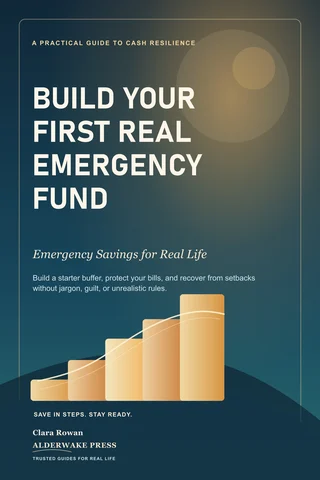
Build Your First Real Emergency Fund by Clara Rowan is published by Alderwake Press in the Practical Systems line.
About the bookRelated Alderwake resources
Practical notesApartment Emergency Preparedness Checklist for Small Spaces
A small-space preparedness system organized by function, rotation, evacuation, documents, and the constraints renters cannot simply renovate away.
First Apartment Essentials: What You Actually Need and What Can Wait
A restrained first-apartment essentials list organized by urgency, function, and the costs that are easiest to avoid.