Urgency narrows the decision
Urgency can exist in real life, but a legitimate process should still survive a brief pause and independent contact. A deadline supplied only by the unexpected caller or message is not independent evidence.
- Act now or the account will close.
- Pay today or a warrant, fine, disconnection, or delivery problem will follow.
- An investment, prize, job, apartment, or purchase will disappear if you verify it first.
- Stay on the phone while moving money or changing account settings.
Secrecy removes help
- Do not tell your bank, family, employer, or government agency.
- A special investigation requires you to keep the payment confidential.
- You are coached on what to say if a cashier or bank employee asks questions.
- The relationship or opportunity will be ruined if you seek another opinion.
Impersonation borrows trust
- Caller ID, logos, email display names, and profile photographs are treated as proof of identity.
- A person claims to be from a bank, government agency, police service, delivery company, technology provider, employer, or family member.
- The contact uses real personal details to make a false story feel verified.
- You are asked to move money to protect it, share a verification code, or install remote-access software.
Unusual payment removes protection
- Gift cards, cryptocurrency, wire transfers, cash couriers, payment apps, or account-to-account transfers are demanded for an unfamiliar purpose.
- A cheque is sent and you are asked to return part of the money before it fully clears.
- The recipient name differs from the person or organization making the request.
- A refund, prize, grant, job, loan, or recovery requires money first.
Unexpected account claims create panic
- A message says a purchase, password reset, delivery, tax bill, subscription, or transfer needs immediate action.
- The only way to dispute it is the link or number inside the message.
- You are asked for a password, one-time code, full card number, or remote device access.
- The contact resists when you say you will open the official app or call the number on your card.
Use the pause-before-you-act system
- Stop. Do not click, pay, install, transfer, or disclose anything else.
- Name the claim. Write down exactly what is supposed to have happened and what action is being demanded.
- Separate the channel. End the contact and use an official app, statement, card, website, or known person to start a new conversation.
- Verify the event and the requested remedy independently. Do not ask only whether the caller's name exists.
- Add another person for any high-consequence decision. Read the request aloud without the caller present.
- Act only through the verified process. If verification fails, block and report the contact.
Make pausing easier before a scam arrives
- Agree on a family verification phrase that is never sent to unexpected contacts.
- Put official bank and service numbers in contacts from verified sources.
- Use unique passwords and multifactor authentication.
- Set account alerts and review them inside the official app.
- Decide that no legitimate caller can keep you on the line while you move money.
- Practice one sentence: I do not make payments or account changes during incoming calls. I will contact the organization directly.
Scope and limits
A warning sign is a reason to verify, not proof that every contact is fraudulent. Scams change quickly, and legitimate organizations can communicate badly. The pause system protects the decision while the claim is checked through a separate channel.
Sources and further help
Explore the book
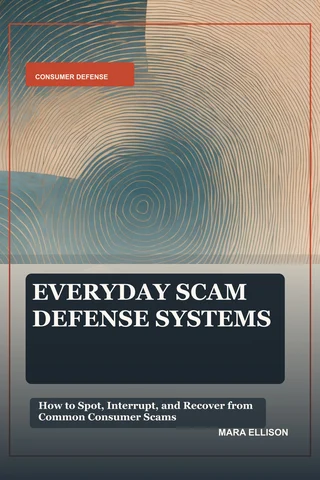
Everyday Scam Defense Systems by Mara Ellison is published by Alderwake Press in the Practical Systems line.
About the bookRelated Alderwake resources
Practical notesUsed Car Red Flags: When to Walk Away
Decision-stopping signals in the seller's behavior, the paperwork, the vehicle, and the deal itself.
What to Do Immediately After You Think You Were Scammed
A calm first-response sequence for payment risk, identity exposure, compromised accounts or devices, evidence, reporting, and follow-up.